Abstract
Development of liberal internationalism emerged when Woodrow Wilson, after World War I (1919), tried to build a type of order through the ‘Treaty of Versailles’ so that liberal democracies could be established in every part of the world to maintain peace and justice. A similar kind of effort was also made by Franklin. D. Roosevelt after World War II, who put an agenda to construct an international community to establish and protect human rights at the universal level.
With this objective, United Nations was formed in 1945, and the Universal Declaration of Human Rights (UDHR) was adopted by UN General Assembly in 1948. It was observed that the United States wanted to eliminate colonialism, imperialism, fascism, and authoritarian powers from around the world to establish democracy everywhere. However, Breton Wood System which was introduced by the United States during World War II to initiate free trade movement divided the world into Core, Periphery, and Semi Periphery countries which re-started the concept of neo-imperialism, neo-colonialism, and neo-capitalism.
Since the formation of the United Nations, the United States played a significant role in great power politics which is reflected in the West Asian Region. Several events occurred such as the establishment of Israel as a State in 1948, US involvement in the Suez Canal crisis to sideline UK and France influence, the contra affairs in the Iran-Iraq War, and a military installation in West Asia through humanitarian intervention in Kuwait.
In most of these event’s US with its economy, monetary power, military capabilities, stronger alliances, and leadership role interfered with all the West Asian politics. Democracy promotion challenged the sovereignty of West Asian countries which was initiated to reduce terror and promote human rights in the region. This article analyses the role of USA in framing the Liberal International Order and understanding the various challenges that West Asia faced because of US interference.
Introduction
The US presence in the West Asian region was noticed when the oil was discovered for the first time in the 1930s. The geographical location of West Asia is important for trade connectivity from Europe to the Asian countries, and the other side of the West Asian region is significant due to its enriched oil and gas reserve (Wu, et. al, 2008). The region discovered oil in 1938 since then American companies in the Dhahran province in Saudi Arabia got involved to export oil all over the world.
After the discovery of oil in the region it changed the deserted politics to an oil-rich trade economy. Almost all the major powers moved to the West Asian region for drilling oil and making business (Lane, 2015). The discovery of oil rapidly changed the political geography of Saudi Arabia and the West Asia region as a rentier state economy (Mohammad, 2017). This made the region to attract large workers from all over the world to work in the West Asian countries. Expatriate workers became one of the reasons for booming the West Asian economy (Mohammad, 2017).
However, making business was not an easy task in the region as Saudi Arabia (Phan et. al, 2015). It is because, the Sunni dominated culture was having conservative nomadic tribes who had never been colonised nor had been in contact with any part of the world. Hence, this proved to be one of the major challenges.
For having a trade relation with West Asian countries the Western countries like, USA introduce their liberal policies. According to which the country will not interfere in their culture or its society but only confine itself to the business activity. So, both can avail the benefits equally. This continued for so many years because of which US profited immensely. This resulted in recognition of Saudi Arabia and its oil all over the world.
Historically speaking, US involvement in the liberalisation of world order started during World War I when US President Woodrow Wilson imposed the Treaty of Versailles, on Germany to accept the ‘War Guilt Clause’ (Goh and Sahashi, 2020). Under this not only Germany was forced to accept the blame for initiating World War I but also paid compensation of around 132 billion gold marks (US$33 billion) and its territory was also divided, military forces restricted to a fixed limit (Kiger, 2019). Germany was humiliated by the US in the name of the liberal international approach to maintaining peace, and justice but it failed.
Adolf Hitler laid the Nazi party in 1933, after that Germany emerged as a powerful player in Europe. Similarly, Benito Mussolini gained power in Italy and joined Germany and Hirohito of Japan (Kiger, 2019). The liberal international order which was developed to prevent the Second World War failed when Germany occupied Poland and other areas and declared war on USSR. During the Second World War, most of the colonies in the world were controlled by the United Kingdom and France (Rostker, 2013).
At the beginning of World War II, the US came to realise that Germany with the help of its axis powers easily defeat France and was also capable to harm the UK. In that situation before the complete defeat of the UK and France by the Axis power, the US wanted to defeat the Axis powers by making allied power. With that objective, during the Second World War US with the liberal international approach formed Atlantic Charter and United Nations and similarly the Bretton Wood System.
The perception behind the formation of the Bretton Woods agreement was very clear to re- establish the US influence in all the colonies. The Bretton Woods System was an agreement of 1944 to establish the International Monetary Fund (IMF), Global Agreement on Tariff and Trade (GATT), and the International Bank of Reconstruction and Development (IBRD). The Bretton wood system replaced the standardisation of gold with the U.S. dollar as the global currency (Hammes and Wills, 2005).
The US dollar was accepted as legitimate currency exchange in international markets for all kinds of trade, which made the US a dominant power in terms of economic power. Sooner, an agreement was made that the US will be the only country that will print the dollar. This was a very diplomatic move by the USA. As the US already knew that after the Second World War the war-torn countries required huge funds to reconstruct their economies, hence those countries who were directly or indirectly involved in the war would require fundings from the IMF and IBRD.
Due to the weakening role of the UK and France during World War II, they lost their dominant position in the world and over their colonies. This was an opportunity for the US to initiate trade relations with all newly independent countries with his Bretton Wood System approaches. For that, the GATT organisations were formed so the US can control the tariff and trade. Till 1971, fifty percent of world’s total income were driven to the US through these institutions (Hammes and Wills, 2005). Later, due to huge investment in the War with Vietnam the US suffered from massive stagflation. It affected the huge unemployment rate, inflation and recession and even the economic growth slows down. The Bretton wood system which managed fifty percent of world trade benefits only to the US collapsed due to the slow economic growth.
Formation of Israel State on Palestinian Land
The US involvement in the West Asian region began with the formation of the Israel State. The demand for the Israel State emerged during the first World War, it gained importance again during the Second World War as Germany started execution of Jews populations (Ram and Goldfarb, 2009). With the help of the US, UK and France the demand of Israel was formed on Palestinian land. The formation of the Israel State on Palestinian land was the starting point of Arab-Israel conflict in the region (Ram and Goldfarb, 2009; Hassan et. al, 2021). The formation of a separate state of Israel in West Asia not only became the reason for the regional instability, but it created armed conflict. Later due to insecurity and instability, the arms race intensified in the region.
The Arab-Israel conflict resulted in several wars with Israel by the Arab countries. Israel fought two wars with neighbour countries-first one in 1967 (June war) and the second in 1973 (Yom Kippur War) (Liebman, 1993). In the 1967 war, Israel not only defeated Syria, Lebanon, and Egypt but also gained control of their territory. Egyptian and Syrian forces launched a coordinated attack against Israel on Yom Kippur to take back their territory, but it was ended with a cease-fire on October 25, 1973 (Liebman, 1993). Arab revolts against Israel happened several times, which was known as intifada (Yaacov, 1994).
The First Intifada (1987-93) was a protest the Israeli occupation laid by Palestinians in West Bank and Gaza Strip. The second intifada is known as Al-Aqsa Intifada it continued for five long years (28 Sep 2000 – 8 Feb 2005). The second intifada or Palestinian uprising against Israel was immediately triggered due to the failure of the Camp David Accord in 2000 (Stein, 2011). Camp David Accord was an agreement on the Israel-Palestine peace process, but it ended with violence and failed to bring peace. The third intifada is also known as the 2014 Jerusalem unrest or ‘silent intifada‘ also called for “a day of rage” in which Hamas and the Palestinian authority repeatedly attack more than 100 times between July-August 2014 against Israel in solidarity with the ‘Jerusalem intifada’ (Carlstrom, 2014).
The third intifada was the immediate cause after the kidnapping and murder of Mohammed Abu Khdeir (16-year-old Palestinian) on 2 July 2014 by Israeli forces on Jerusalem Street (Rudoren, 2014). Most of the time it is the US support for Israel that culminated into lot of regional tensions. Still, the Arab-Israel conflict has not gained any solution, the two-state solution was made from the Palestinian side, but it is still Pending. The recognition of the Palestinian states is as an observer in which civilians in Palestine are still dependent on Israel for food, water, and their basic requirement. The peace initiative from the Israeli side was rather to solve it created more conflict which suppressed the demand of Palestinian for water and food supply. The US support of Israel is one of the major reasons for that.
Role of the US in the Suez Channel Crisis
Another significant opportunity grabbed by the US was when Egyptian President Gamal Abdel Nasser nationalise the Suez Canal in 1956. Egyptian forces take over control of the Suez Canal from the UK and France who were controlling it (Hanhn, 1991). On 26 July 1956, Egyptian President Gamal Abdel Nasser threaten British and French stock holdings in the Company, as the Canal was the affordable way for the European countries to access the West Asian oil and gas.
Nasser also threatened to cut off Europe’s oil supply from the West Asian countries (Hanhn, 1991). The threat of Nasser challenged regional stability. The U.S. was indirectly involved to help Egypt to negotiate with Britain and France. The negotiation between the Nasser and United States and Britain reneged on the earlier agreement in which they have to support financially to construct the Aswan Dam project.
The Aswan Dam project was designed to control the overflow of Nile’s water and to use it for agricultural electricity purposes. Egypt was knowing that without the help of the United States not possible (Lutmar, 2023). However, Nasser also made several attempts to make friendly relations with the communist block and China. But ultimately, to generate revenue from the tolls, ship using the Suez Canal is also required to subsidise to construct the building of the Aswan Dam.
The US involvement in the region deepens, by making good relations with Iraq, Iran, and Saudi Arabia (Hanhn, 1991). The US political involvement in Egypt made several upheavals in national politics. Even it led to the execution of the Egyptian president Anwar Sadat. Today, US dominance is in Egypt, Iraq, and Libya. In the name of democracy promotion, the US is controlling the politics of Egypt, Iraq, and Libya for their benefit.
Islamic Revolution of Iran and US Response
Mohammad Reza Shah Pahlavi’s regime in Iran was enjoying under the protection of the United States but in 1979 Islamic revolution in Iran toppled the pro-US Shah regime and installed a new regime. Reza Shah ruled Iran from 1941 to 1979, during his phase he maintained a pro-Western foreign policy and bought all westernisation and modernisation to Iran (Murray, 2009). He even fostered economic development in Iran which mainly favoured the US and European countries. Reza Shah introduced liberalisation policies, and development programs under the ‘White Revolution’, to expand the road network, railway line, construction of the dam for irrigation activities, land reform, to improve the health & education sector for unprecedented economic and industrial growth (Yazdani and Hussain, 2006).
He established a literacy and health corps to benefit the agricultural sector, but much of the rural population was isolated from these benefits. Since the large population was living in rural area were not happy with all such development Programme, which only benefits the few elites or the western companies. All over Iran, the hegemonic position of US companies was harming the national factories and small-scale industries.
The ‘white revolution’ froze his domestic support and faces political and religious criticism as the reform only promoted westernisation and modernisation in Iranian Islamic culture. Iranian people believe that their Islamic culture will lose its Islamic identity under the reform initiated by the Shah regime. The reform interfered with every aspect of their cultural life. Iranian also believes that westernisation is to be antithetical to Islam.
During the tenure of the Shah regime, the autocratic rule was imposed everywhere people are not allowed to speak against the government, corruption was increased, income inequality also reached a high level, unequal distribution of the country’s oil wealth benefited the government only, atrocities of SAVAK (the secret police) increased to the opposition and the dissent.
The negative role of the Shah toward their own country dissatisfied people, most of the oil export money was utilised to maintain the luxury of the Shah. Widespread hatred against the Shah increased the active participation of the lower classes and the student movement. In 1978, the Islamic revolution was gained in support of Ayatollah Ruhollah Khomeini (a Shi’i religious leader who was living in exile in Paris). People’s movement, rioting, and turmoil in Iran’s major cities brought down the Shah regime. On 16 January, Reza Shah left, and Ayatollah Khomeini took the control of Iran. Since then, the US has made several sanctions against Iran, which affect the oil export and major development policies.
As Iran’s economy is mostly dependent on oil export but due to US and European sanctions, Iran is still not able to increase its oil export, Iran’s nuclear enrichment programmed for public purposes was also under the sanction of the US.
US Involvement in the West Asian Region with First Gulf War
After the Islamic revolution of Iran, the pro-US shah regime was overthrown from Iran, which created a stability challenge for the US in the region, and also a threat to Israel’s security. US- supported Iraq for every essential to declare war against Iran. Saddam Hussein with having military and economic support of the United States declared himself the leader of the Arab countries (Cordesman, 1991). On 17 September 1980, Iraq condemned and accused Iran of supporting the Kurdish insurgents.
He said, supporting the Kurdish is a violation of the 1975 Algiers Accord and abrogated it (Various authors, 2021). The agreement was made to settle the border dispute through a peaceful share of the Shatt al-Arab waterway (Schwab, 2008). Within one-week Iraqi forces overtake the control of the Shatt al-Arab waterway, which was the only water route to export oil production to the outside region. Iraq invaded Iran, the war lasted for eight long years, and both sides faces massive human casualties. Chemical weapons, Mustard Gas, and other heavy weapons were used against the Iranian soldiers.
The war was between Iran and Iraq, but several countries were involved to support Iraq as well as Iran. The United States supported Iraq but also supplied arms to Iran. The war was not gained international attention. The US silently played its role in the Iran-Iraq war and unambiguously supported Iraq through military and intelligence data. In 1985, during the Iran-Contra affair, the US government under the Reagan administration made a negotiation with Iran to supply arms against Iraq (Bulloch and Morris, 2016). The role the US played from each side was contradictory, it neither benefitted Iraq nor Iran but the US was involved in the politics of West Asia as an arms seller country.
Iraq, which used chemical weapons against Iran in the Iran-Iraq war defied the 1925 Geneva Protocol that outlawed the use of chemical weapons, mustard gas, and other nerve agents. Later Iran approached the United Nations and reported the use of illegal weapons by Iraq, but it does not support the first call. The UN investigation team found that Iraq had used poison gas “on almost a daily basis.” On 18 July 1988, both Iran and Iraq unconditionally accepted UN Resolution 598 for a ceasefire, exchange of prisoners, a return to prewar borders, and the establishment of a war review commission (Weinrauch, 1989).
Second Gulf War: US Military Installation in West Asia
The first gulf war was between ‘Iran and Iraq’ which ended in 1988. Just after the two years, the United States’ policies shifted from Iraq to Saudi Arabia. Iraq was in huge debt from Kuwait and Saudi Arabia due to the purchase of arms from the US to use against Iran in the Iran-Iraq war. Saddam’s eye was on Kuwait’s massive oil resources to pay his war debt. Iraq expected that once Kuwait will be controlled by Iraq; they can easily pay the debt only to Saudi Arabia, otherwise have to pay the debt to both Kuwait and the Kingdom (Malanczuk, 1991).
The US support was still with Saddam and with his support on 18 July 1990, Iraqi Foreign Minister Tariq Aziz sent a letter to the Arab League and accused Kuwait of “stealing Iraqi oil, installing military near the Iraqi border, and refused to cancel loans it had made to Iraq during the Iran- Iraq War.”
Saddam with an allegation asked Kuwait to forgo the debt, but Kuwait rejected the request and responded negative way. Saddam Hussein invaded Kuwait on August 2, 1990, Iraq sent more than 100,000 troops, including 300 tanks, artillery, and armoured personnel carriers. In just six hours, Iraq fully occupied Kuwait and declared Kuwait as Iraq’s 19th province (Bashkin, 2015). With just 20,000 military forces Kuwait has no match in front of the Iraqi forces. After Iraq invaded Kuwait, ruling Amir immediately fled to Saudi Arabia and requested the US to interfere they will bear all the cost of it.
Dania Thafer, director of the Gulf International Forum expressed that the “from Kuwait’s perspective, Iraq has always harboured an expansionist agenda towards Kuwait and their invasion fit into that agenda,” and “Many in Kuwait also argued that the invasion was largely motivated by Iraq’s desire to control Kuwait’s large oil reserves,”. Soon after the invasion of Kuwait, Iraq faces international community condemnation which isolated Iraq politically and economically. UNSC voted 13 to 0, with Cuba and Yemen abstaining, to follow the United States’ initiative for all member states to impose immediate restrictions on Iraq under the United Nations resolution.
UN Security Council (UNSC) immediately asked Iraq to withdraw its forces unconditionally from Kuwait. However, after the UN warning, Iraq was still controlling and looting Kuwaiti cities. The UNSC then authorised the United States to use “all necessary means” to evacuate Iraqi forces out of Kuwait if Saddam Hussein does not withdraw its troops by 15 January 1991 (Baahkin, 2015). At the same time, US President Bush assembled the US and allied troops in the land of Saudi Arabia to protect the Saudi Kingdom and to attack the Iraqi forces if they did not leave Kuwait within the deadline.
The UNSC decision also imposed international trade and economic sanctions on Baghdad. The US and their allied forces launched “Operation Desert Storm” against Iraq on 17 January 1991(Southwick et.al, 1997). The Second Gulf War ended in just three weeks which overthrow the Saddam forces from Kuwait. However, US forces never leave Kuwait and Saudi Arabia, and the US-installed military base in other countries too. On behalf of Kuwait, US isolated the Saddam Hussein from West Asia till his execution.
The US planned to invade Iraq, on the pretext of Weapons of Mass destruction, they alleged Iraq and attacked. Despite the initial claims of weapons of Mass destruction, there was no concrete evidence that Saddam Hussein is in the process to develop chemical weapons or weapons of Mass destruction. When the United Nations inspectors wanted to inspect Iraq, Saddam refuses to be entering them in Iraq. By refusing the UN inspectors into Iraq, Hussein sealed his fate.
Iraqi weapons of mass destruction (WMDs)—which proved to be hollow, and the actual motives and causes. Since the war, the deception practiced by the Bush administration has been exposed; but even before it was clear to ex-weapons inspectors and Iraq specialists that Saddam had no serious WMD capability and certainly not one capable of threatening the US. Robert Jervis already had dissected and discredited the claims that even a nuclear-armed Iraq posed a threat to the US, that it could not be contained, and therefore had to be taken out by preventive war; he concluded that the only thing that made deterrence appear inadequate for US purposes was the overweening ambition of the Bush administration to dominate and overthrow any regime it disliked.
September 11 Attack and its Impact
US President George W. Bush on January 29, 2002, after the World Trade Centre attack address the State of the Union and describes Iraq, Iran, and North Korea as an “axis of evil” countries that are involved in supporting and funding al-Qaida group for terrorists’ activities. The reason behind the declaration of the “axis of evil” was clear to topple the Saddam regime from Iraq, and to target Iran. The United States in February 2003, invaded Iraq and arrested Saddam Hussain. Just before the invasion of Iraq, Colin Powell, the US secretary of State, stated in the United Nations Security Council that “We know that [dictator] Saddam Hussein is determined to keep his weapons of mass destruction; he’s determined to make more.” (Heradstveit, 2007).
However, after the hanging of Saddam Hussain, it was made clear that the Saddam government never made any attempt to reach the Weapons of Mass Destruction. It was just mistakenly they hanged Saddam or the pre-motive of the US behind the targeting Saddam regime and installing minorities puppet regime to exploit the oil resources from Iraq. All the fund for the US invasion of Iraq was managed by the Iraqi Kurds who were still ruling the country. Later the fact was also disclosed that in the World Trade Centre attack out of 19 terrorists, 15 belong to Saudi Arabia only.
However, Bush did not mention the name of the Kingdom in the ‘Axis of Evil’ country list due to their close ally of the US (Chehab, 2007). In 2004 the commission was set up to investigate the 9/11 case and did not find any evidence against the Kingdom for funding al-Qaeda members. However, in 2012 a report released by the Federal Bureau of Investigation (FBI) expressed that the al-Thumairy and Omar Ahmed al-Bayoumi, Saudi citizens helped hackers and attackers to attack the World Trade Centre. Even though the US never took any action against Saudi Arabia, but later included Libya, Syria, and Cuba as another axis of evil countries for supporting terrorist activities all over the world (Golden and Sebastian, 2020).
US Hegemonic Position during Arab Spring
The Arab Spring/Arab revolt started in Tunisia, then Egypt and Libya started due to huge corruption, high food prices, unemployment, authoritarian government, poverty, etc. The revolt quickly gained attention in Arab countries like Bahrain, Yemen, Saudi Arabia, and Syria. People revolted in all these countries to remove their monarchy governments and install the representative government (democracy). However, immediately after the revolution the US was involved in the region (Kitchen, 2012).
The US administration never wanted to lose this opportunity to install their favourable government in the countries so they can use their resources. The Obama administration’s intervention in Libya was already people elected their President Mohamed Morsi through the election. However, the US administration with their military forces again intervene in Libya and through the coup’ dissolved parliament, reinstated martial law, and supported Abdel Fattah Saeed Hussein Khalil el-Sisi as Egypt’s president.
In the formation of the new Morsi government in Egypt, many states played their card to take benefits. Qatar helped Egypt with over $5 billion and Turkey with $2 billion in the support of Morsi’s government. Even after the coup, Saudi Arabia, the UAE, and Kuwait invested more than $12 billion in the appointment of Sisi’s government (Shadi, 2015). The reason behind the intervention of the US in Libya as Gaddafi with his new policy sidelined the US and European countries. Since 1978, the United States’ assistance to Egypt was reached more than $50 billion for military and $30 billion for economic assistance (US Department of State, 2021).
The Morsi government again created a loss for the US as an intervention in Libya was without any decision from the UN. A similar effort was made in Syria. But, in the case of Syria, both Russia and China, used veto power against the US intervention proposal in Syria. The US tried with full effort to change the Assad Government from Syria but due to Libya’s deteriorating conditions Russian and China interfered to stop them.
They know that the primary motive of the US is not to establish democracy in Syria but to overthrow the Iranian-supported Assad government, which is considered a threat to Israel’s security. At present, due to US involvement in Iran and Saudi Arabia, Yemen is facing one of the worst humanitarian crises in the world. Almost 70 percent of people are highly affected and do not have food to survive. But due to the interest of the US to install their regime in Yemen still, the humanitarian crisis is going on. Yemen people are dying in the conflict but hardly it can gain the world media attention.
Conclusion
Since the formation of the United Nations, the United States started promoting democracy all over the world. However, on the pretext of democracy promotion the US also wanted to achieve its personal goals and capitalist ideology in the name of promoting liberal order. During the Cold war, both US and Russia intervene in many countries to promote their ideology in the name of liberal international order. The US took the approach of democracy promotion through arms, but we know that democracy cannot be promoted through arms.
This is the reason, the US democracy promotion was not seen any achievement, rather it failed in most the countries. The US policies in now facing world criticism as whatever approach made to promote liberal international order failed in countries such as Afghanistan, Iraq, Libya, Egypt, Yemen etc. The US involvement in the West Asian region not only destroyed the peace but also the arms race raised several conflicts. Due to the presence of US military forces in the West Asian countries, all countries do not have trust or peaceful relations with each other. The region is full of sectarian conflict. When people protested and revolted against the monarchy government the US was always involved and stopped it, rather than promoting democracy supported and protected the Monarchial government.
The US intervention in Afghanistan, Iraq, and Libya is an example that these countries were having peace before US intervention. During the Arab Spring, all such countries as Tunisia, Egypt, Yemen, and Bahrain have performed their best satisfaction but due to the United States’ interests in the Arab countries, it failed to secure their interest.
This paper ends with the statement given by Dania Al-Dhafer, Director of the Gulf International Forum who said that “the US benefitted economically from its expanded security role in the Gulf. Defense and military trade increased as the US began having more military-to-military cooperation with the GCC states” (Ibrahim, 2020). All such conflict (formation of Israel State, Iran-Iraq War, Gulf War, Invasion of Kuwait and Iraq) in the West Asian countries is the idea of the United States to fulfil its geostrategic opportunity and expand US military presence in the Gulf region and solidify its position as a superpower.
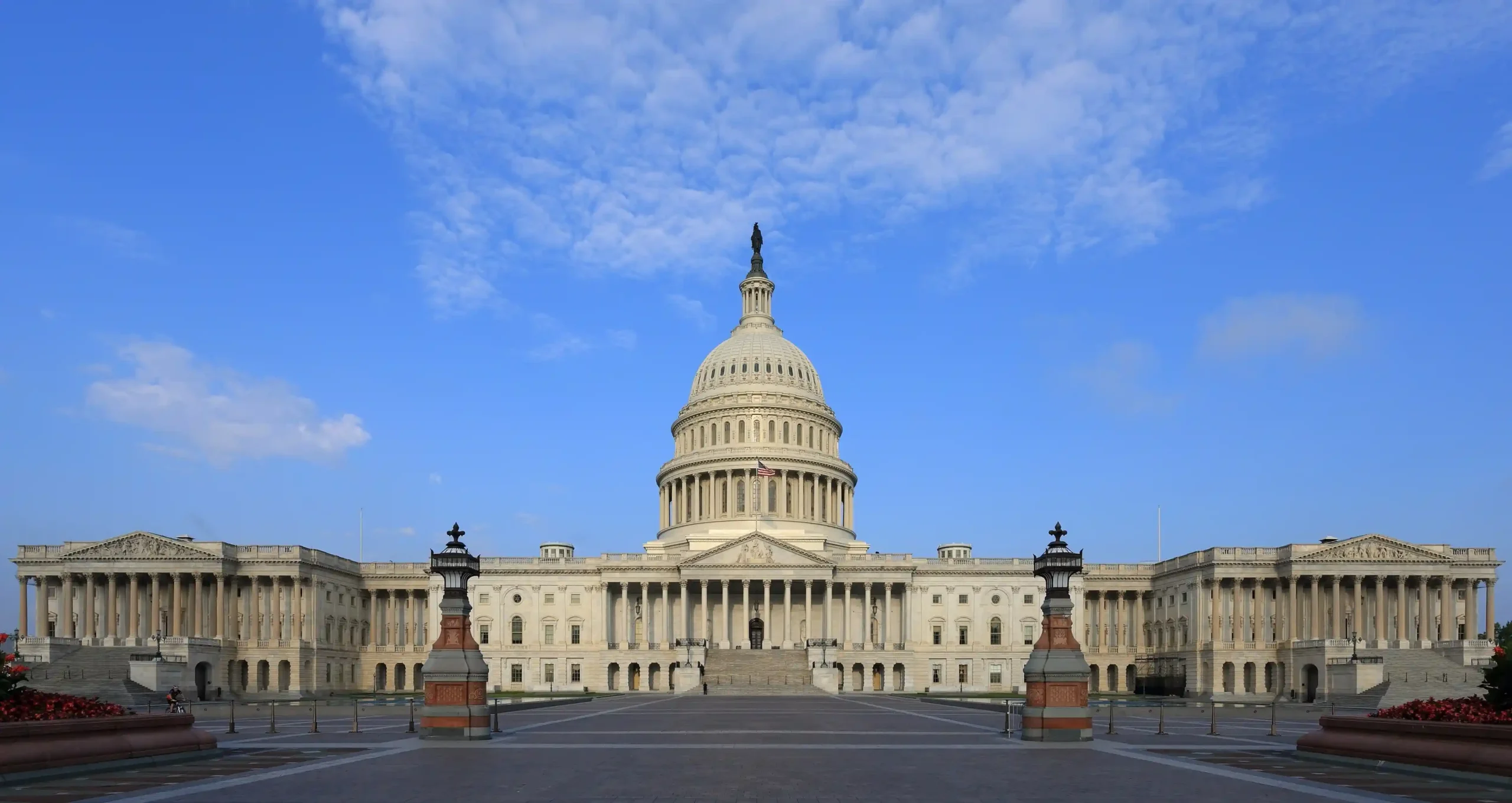
All the views and opinions expressed are those of the author(s). Image Credit: Martin Falbisoner.
References
- WU, K., FESHARAKI, F., WESTLEY, S. B., & PRAWIRAATMADJA, W. (2008). Oil in Asiaand the Pacific: Production, Consumption, Imports, and Policy Options. East-West Center.
- Lane, L. (2015). Oil and World Power. The New Atlantis, 47, 3–17.
- Mohammad, A. (2017). The Paradox of a Rentier State. Foreign Policy News.
- Phan, S., Miller, D.W., Lapin, D., Zakaullah, M.A., Erisman, A. (2015). Business and Religion: Religious Perspectives on Business from Buddhism, Christianity, Judaism, and Islam. In: Erisman, A., Gautschi, D. (eds) The Purpose of Business. Palgrave Macmillan, New York.
- Goh, E and Ryo Sahashi. (2020). World Views on the United States, alliances and the changing international order: an introduction. Contemporary Politics, Taylor and Francis, Vol.26, Issue.4.
- Kiger, J. Patrick, (2019). The Treaty of Versailles Punished Defeated Germany with These Provisions. History.
- Rostker, B. (2013). World War II. In Providing for the Casualties of War: The American Experience Through World War II (pp. 175–240). RAND Corporation.
- Hammes, D., & Wills, D. (2005). Black Gold: The End of Bretton Woods and the Oil-Price Shocks of the 1970s. TheIndependent Review, 9(4), 501–511.
- Ram, U., & Goldfarb, J. C. (2009). Introduction: The Culture of Conflict in Israel and Palestine. International Journal of Politics, Culture, and Society, 22(1), 1–3.
- Hassan, Z., Levy, D., Keir, H., & Muasher, M. (2021). Breaking the Israel-Palestine Status Quo. Carnegie Endowment for International Peace.
- Liebman, C. S. (1993). The Myth of Defeat: The Memory of the Yom Kippur War in Israeli Society. Middle Eastern Studies, 29(3), 399–418.
- Yaacov Bar-Siman-Tov. (1994). The Arab-Israeli Conflict: Learning Conflict Resolution. Journal of Peace Research, 31(1), 75–92.
- Stein, E. (2011). The “Camp David Consensus”: Ideas, Intellectuals, and the Division of Labor in Egypt’s Foreign Policy toward Israel. International Studies Quarterly, 55(3), 737–758.
- Carlstrom, G. (2014). Tensions Mount in East Jerusalem. Aljazeera.
- Rudoren, Jodi. (2014). In Jerusalem Unrest Signs over Run-over-Intifada for the 21st Century. The New York Time.
- Hahn, P. L. (1991). The United States, Great Britain, and Egypt, 1945-1956: Strategy and Diplomacy in the Early Cold War. UNC Press Books.
- Lutmar, C., & Rubinovitz, Z. (Eds.). (2023). The Suez Canal: past lessons and future challenges. Springer Nature.
- Murray, D. (2009). US foreign policy and Iran: American-Iranian relations since the Islamic revolution. Routledge.
- Yazdani, E., & Hussain, R. (2006). United States’ policy towards Iran after the Islamic revolution: An Iranian perspective. International Studies, 43(3), 267-289.
- Cordesman, A. H., & Wagner, A. R. (1996). TheGulfWar. Westview Press.
- Various. Authors (2021). Routledge Library Editions: Iran Mini-Set A: History 10 Vol Set. United Kingdom: Taylor & Francis, pp. 202.
- Schwab, O. (2008). The Gulf wars and the United States: shaping the twenty-first century. Bloomsbury Publishing U.
- Bulloch, J., & Morris, H. (2016). The Gulf War: its origins, history and consequences. Routledge.
- Weinrauch, J. (1989). Iran’s Response to UN Resolution 598: The Role of Factionalism in the Negotiation Process. American-Arab Affairs, (31), 15.
- Malanczuk, P. (1991). The Kurdish crisis and allied intervention in the aftermath of the Second Gulf War. Eur. J. Int’lL., 2, 114.
- Bashkin, O. (2015). Deconstructing destruction: The second Gulf War and the new historiography of twentieth-century Iraq. The Arab Studies Journal, 23(1), 210-234.
- Southwick, S. M., Morgan, C. A., Nicolaou, A. L., & Charney, D. S. (1997). Consistency of memory for combat- related traumatic events in veterans of Operation Desert Storm. American Journal of Psychiatry, 154(2), 173- 177.
- Daniel Heradstveit and G. Matthew Bonham (2007), What the Axis of Evil Metaphor Did to Iran, Middle East Journal, Vol. 61, No. 3 (Summer), pp. 421-440
- Chehab, Z. (2007). Inside Hamas.
- Golden, Tim and Rotella Sebastian. (2020). The Saudi Connection: Inside the 9/11 Case That Divided the F.B.I.. The New York Times Magazine.
- Kitchen, N. (2012). After the Arab Spring: power shift in the Middle East?: the contradictions of hegemony: the United States and the Arab Spring
- Shadi ,Hamid. (2015).Islamism, the Arab Spring, and the Failure of America’s Do-Nothing Policy in the Middle East.
- US Department of State. US Relations with Egypt. (2021).
- Ibrahim, Arwa (2020), Thirty years on, Iraq’s invasion of Kuwait still haunts region
Bibliography
- Rabinowithch, Eugene (1957). The First Year of Deterrence. (ed.) Chicago: Bulletin of the Atomic Scientists.
- Douglas, William Orville et. al. The Douglas Letters: Selections from the Private Papers of Justice William O. Douglas. California: Adler & Adler. 1987
- Grammas, George N. (1991), Multilateral Responses to the Iraqi Invasion of Kuwait: Economic Sanctions and Emerging Proliferation Controls, Maryland Journal of International Law, Volume 15, I, pp. 04
- Ibrahim, Arwa (2020), Thirty years on, Iraq’s invasion of Kuwait still haunts region
- Hinnebusch, R. (2007). The US invasion of Iraq: Explanations and implications. Critique: Critical Middle Eastern Studies, 16(3), 209-228.
- Mearsheimer, J. J. (2019). Bound to fail: The rise and fall of the liberal international order. International security, 43(4), 7-50.
- Dixon, M. (2011). An Arab Spring. Review of African Political Economy, 38(128), 309-316.
- Yom, S. (2020). US foreign policy in the Middle East: The logic of hegemonic retreat. Global Policy, 11(1), 75- 83.
- Kubursi, A. A., & Mansur, S. (1993). Oil and the Gulf War: An” American Century” or A “New World Order”. Arab Studies Quarterly, 1-17
- Finlan, A. (2003). The Gulf War 1991. Routledge
- Ikenberry, G. J. (2005). Power and liberal order: America’s postwar world order in transition. International Relations of the Asia-Pacific, 5(2), 133-152
- Ikenberry, G. J. (2018). The end of liberal international order?. International affairs, 94(1), 7-23
- Glaser, C. L. (2019). A flawed framework: Why the liberal international order concept is misguided. International Security, 43(4), 51-87.
- Kundnani, H. (2022). What is the liberal international order?. German Marshall Fund of the United States.
About the Author(s)
Dr. Sumant Kumar is an Associate Professor at the Alliance School of Liberal Arts, Alliance University, Bengaluru, India. Dr. Kumar completed his PhD from the Centre for West Asian Division, Jawaharlal Nehru University. (Click here for ORCID ID).
Ishita Maity is a PhD Scholar in the field of Political Science (Liberal Arts) in Alliance University, Bengaluru. She is also working as an Adjunct Faculty at the Alliance School of Liberal Arts, Alliance University. Her research area is on the Nuclear policy of India. She has completed her Post-Graduation in Political Science and International Relations from Presidency University, Kolkata and earlier worked as a Faculty in North Bengal University. (Click here for ORCID ID).
Competing/Conflict of Interest
The author(s) declares no competing interests.
Rights and Permissions
Open Access: This article is licensed under a Creative Commons Attribution-NonCommercial-ShareAlike 4.0 International (CC BY-NC-SA 4.0). You are free to share (copy and redistribute the material in any medium or format) and adapt (remix, transform, and build upon the material) under the following terms.
1) Attribution: You must give appropriate credit, provide a link to the license, and indicate if changes were made. You may do so in any reasonable manner, but not in any way that suggests the licensor endorses you or your use.
2) NonCommercial: You may not use the material for commercial purposes.
3) ShareAlike: If you remix, transform, or build upon the material, you must distribute your contributions under the same license as the original.
To view a copy this license, click here. The images or other third party material in this article are included in the article’s Creative Commons license, unless indicated otherwise in a credit line to the material.
You must be logged in to post a comment.